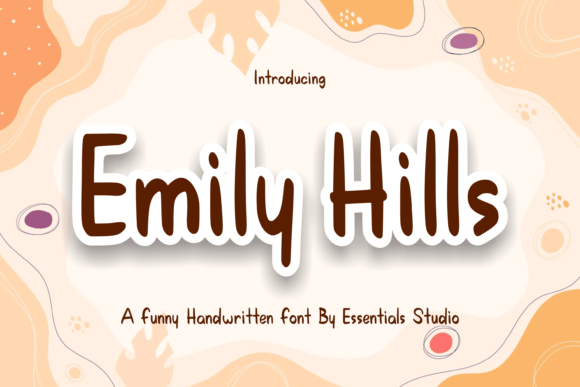
Emily Hills Font — A Playful Display Typeface Worth Your Attention
If you have ever scrolled through design inspiration and wished a font could just feel fun without sacrificing polish, Emily Hills might be exactly what you are looking for. This funny display font brings a lively, expressive personality to any project, and it does so with enough refinement to work in serious design contexts too. Whether you are building a brand identity, designing wedding invitations, or creating social media graphics that actually stop the scroll, Emily Hills earns its place in your creative toolkit.
What Makes Emily Hills Stand Out as a Display Font
Not every display font manages to walk the line between playful and professional, but Emily Hills does it naturally. As a display font, it is designed to grab attention — think bold headlines, eye-catching titles, and expressive text that sits above imagery or backgrounds. Unlike a standard serif font or sans serif font built for long-form readability, Emily Hills thrives in short bursts of text where personality matters more than paragraph-level comfort.
Its handwritten feel gives it a warm, approachable quality that feels less corporate and more human. For designers working on modern typography projects that need character, this is a creative font that delivers without overcomplicating things. It reads as confident yet casual, which is a surprisingly versatile combination.
Projects Where Emily Hills Truly Shines
One of the best things about Emily Hills is how wide its range of use cases actually is. Here are some of the most common situations where designers reach for this typeface:
Product packaging design — The bold, expressive lettering makes labels and boxes feel artisan and memorable.
Branding projects and logo design — A brand that wants to feel friendly and distinctive can anchor its identity with this font.
Wedding stationery and invitations — The handwritten quality adds an elegant yet personal touch to event designs.
Social media graphics and poster design — Short, punchy text over images is exactly where this display font performs best.
Editorial and magazine layouts — Using it for pull quotes or section headers adds visual variety to a spread.
Basically, anywhere you need words to express something above a background — a photo, an illustration, a solid color — Emily Hills fits right in. It is the kind of font that makes a design feel intentional rather than default.
Pairing Emily Hills With Other Typefaces
A strong display font like Emily Hills works best when it has a clean partner to balance it out. For font pairing, consider pairing it with a simple sans serif font for body text or a classic serif font for a more editorial feel. The contrast between something expressive and something neutral creates visual hierarchy that guides the reader's eye naturally.
If you are working on a web design project, use Emily Hills sparingly — maybe for a hero section or a featured headline — and let a more readable typeface handle the rest. This keeps the design accessible while still letting the display font do what it does best: stand out.
A Quick Tip on Scalability
Display fonts can sometimes lose their charm when scaled down too small. Emily Hills holds up well at larger sizes, which is exactly where you want to use it. For anything under 14pt, test it carefully to make sure the details stay legible. This is true for most premium font choices in this category, so it is worth keeping in mind during your design process.
Why Typography Choices Shape Brand Perception
People notice fonts before they realize they are noticing them. The typeface you choose sends a message about your brand before a single word is read. A script font or handwritten style like Emily Hills communicates warmth, creativity, and approachability. It tells your audience that the brand behind the design is not afraid to show some personality.
For commercial font projects — especially ones involving packaging, merchandise, or client-facing materials — that kind of visual confidence matters. It is the difference between a design that feels generic and one that feels like it was made with care. Emily Hills gives you that edge without demanding a massive learning curve.
Getting the Most From This Font Download
Before you dive in, take a moment to think about the tone of your project. Emily Hills works best when the overall design supports its playful energy. Pair it with warm color palettes, organic textures, or clean layouts that let the lettering breathe. Avoid cluttering the space around it — this font wants room to do its thing.
Also, check the licensing terms before using it in any commercial font application. Making sure you have the right usage rights saves headaches later and lets you use the typeface across branding, print, and digital projects with full confidence.
At the end of the day, choosing the right font is one of the most impactful decisions you can make in any design project. Emily Hills offers that rare combination of fun and function — a display font that looks great, feels approachable, and works hard across a surprising number of creative contexts. If your next project needs a typeface with real character, this one deserves a spot on your shortlist.